
You are about to visit a Philips global content page
Continue
Aug 16, 2026
By the Philips Foundation team
Across rural India, millions of people struggle to receive adequate follow-up care. Over the past fifteen years, iKure has developed a community-based model that brings healthcare closer to where people live. Supported by Philips Foundation and World Diabetes Foundation through ImpactBridge, it offers a practical example of how primary healthcare can be strengthened in underserved communities, and what others can learn from it.
Philips Foundation invests in social ventures that help expand access to quality healthcare in underserved communities. These deep dives show how selected investees are scaling practical healthcare solutions that strengthen primary care, improve referral pathways, and support more sustainable models of care.
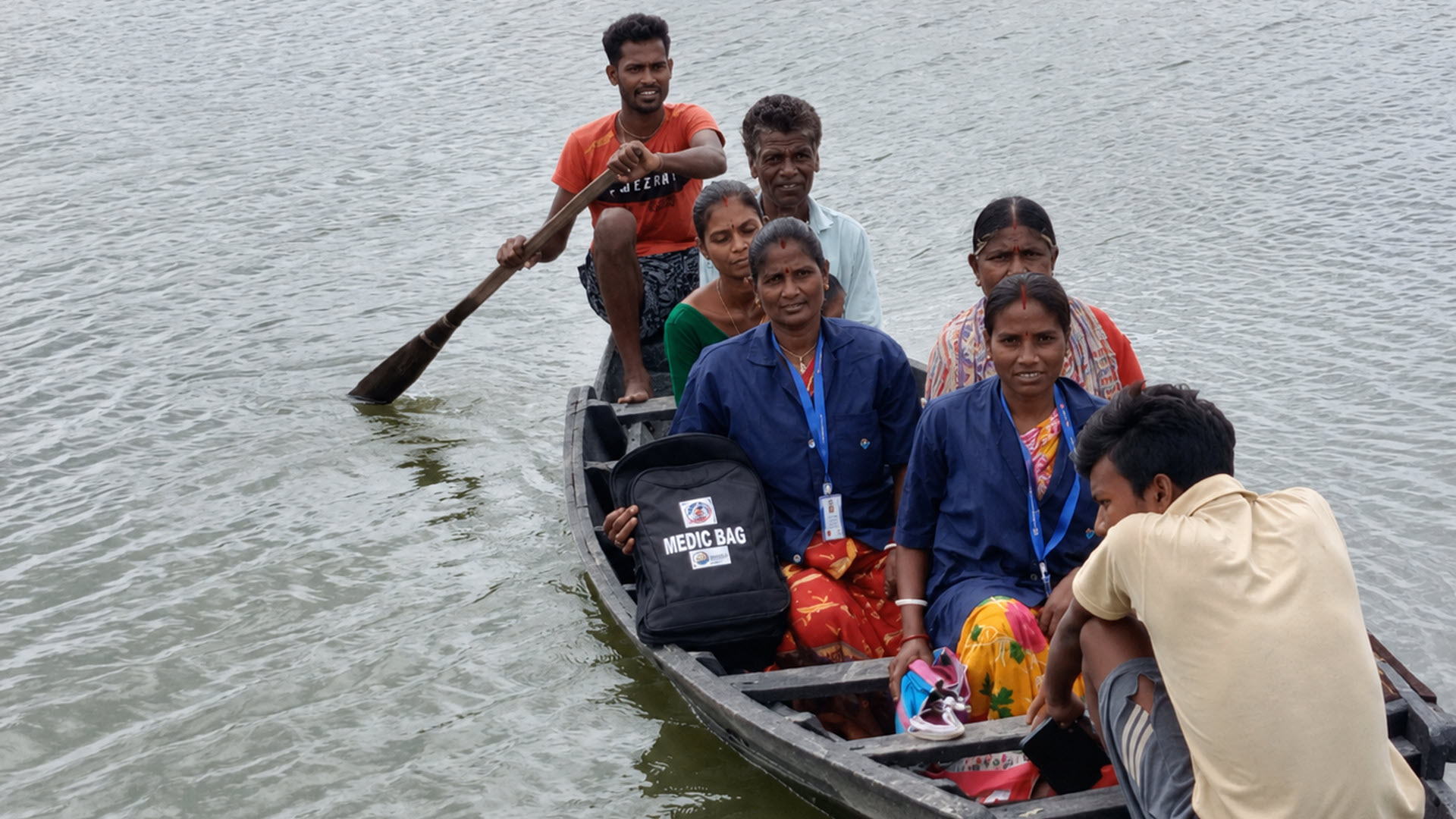
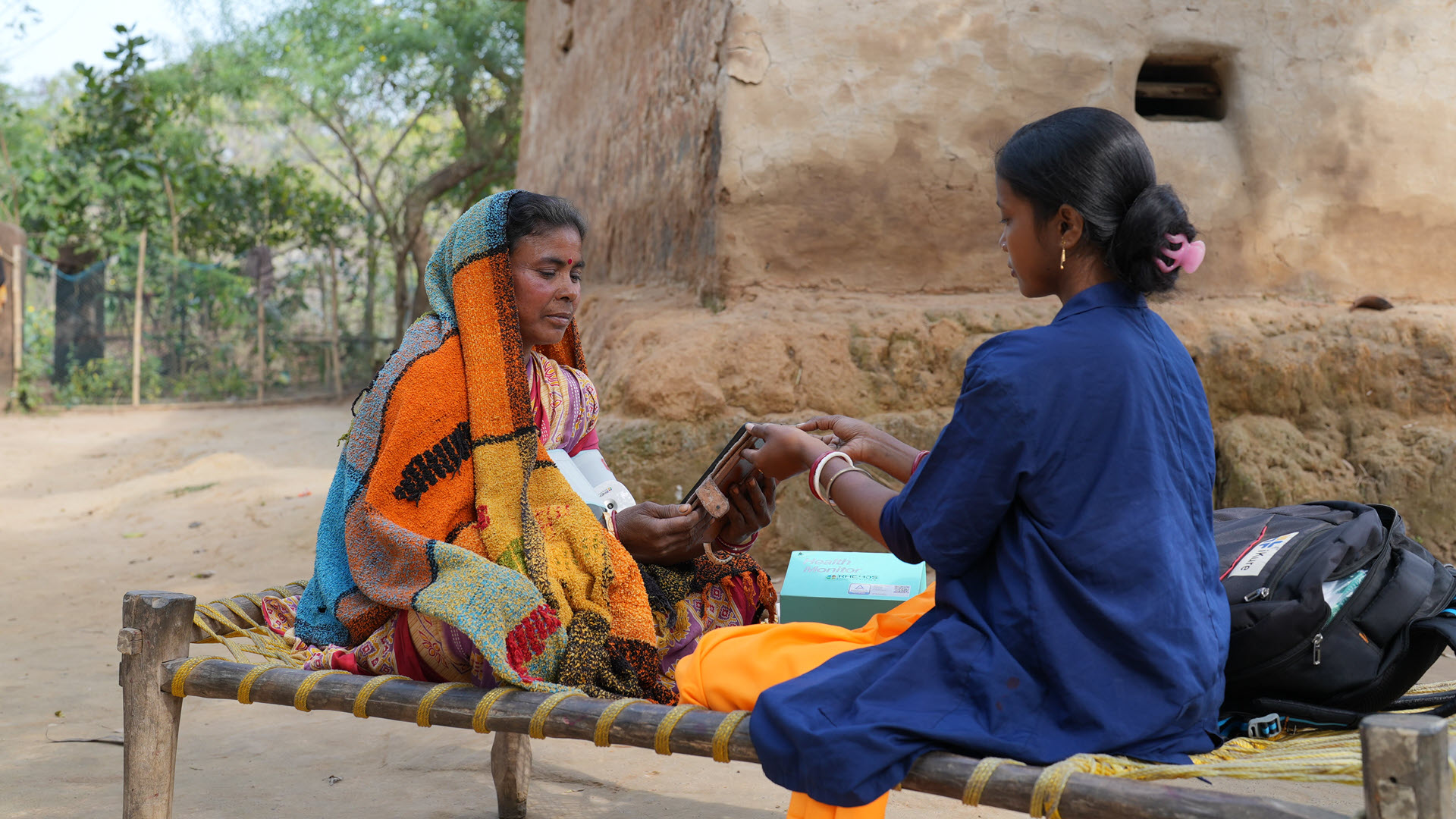
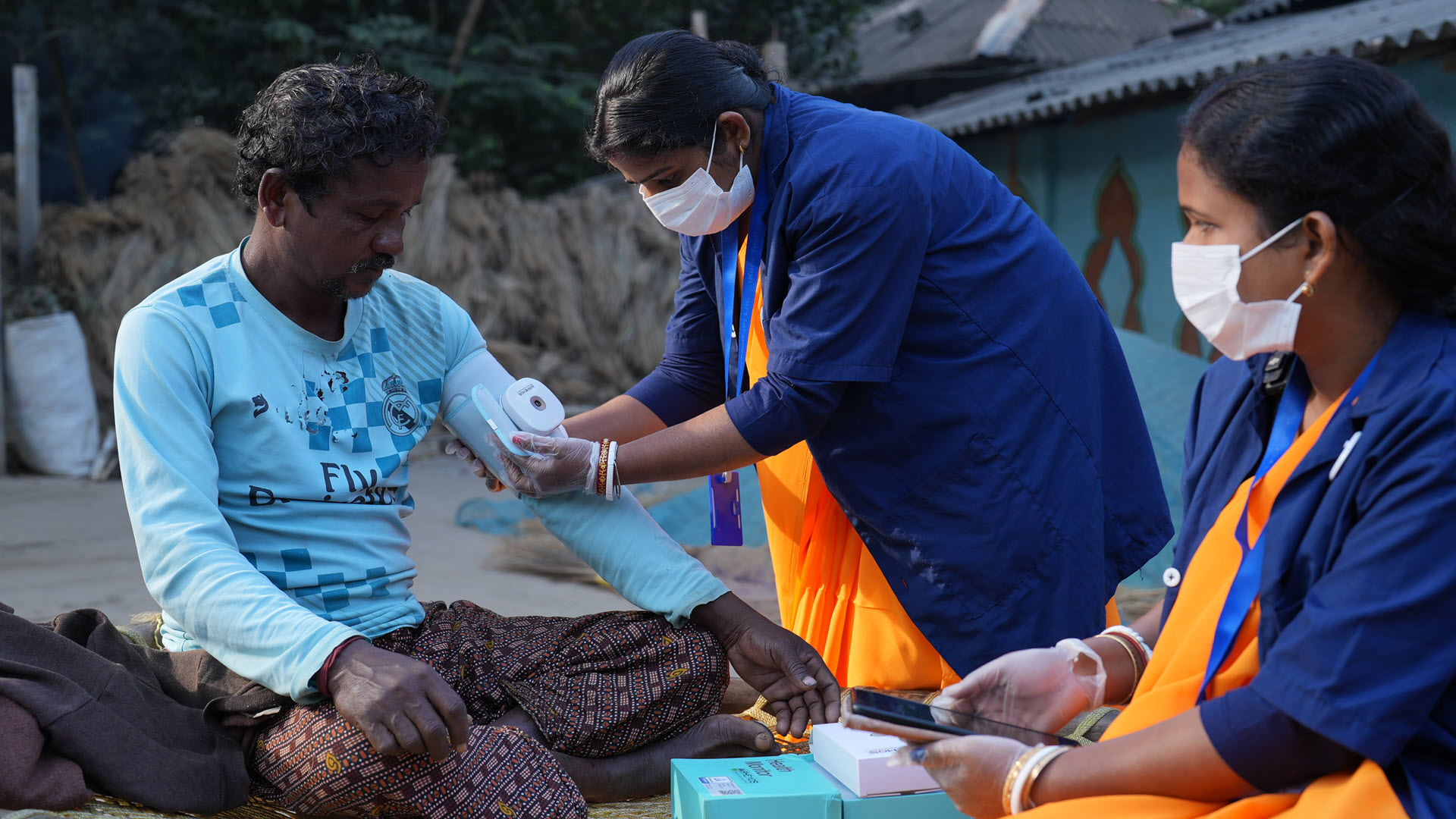
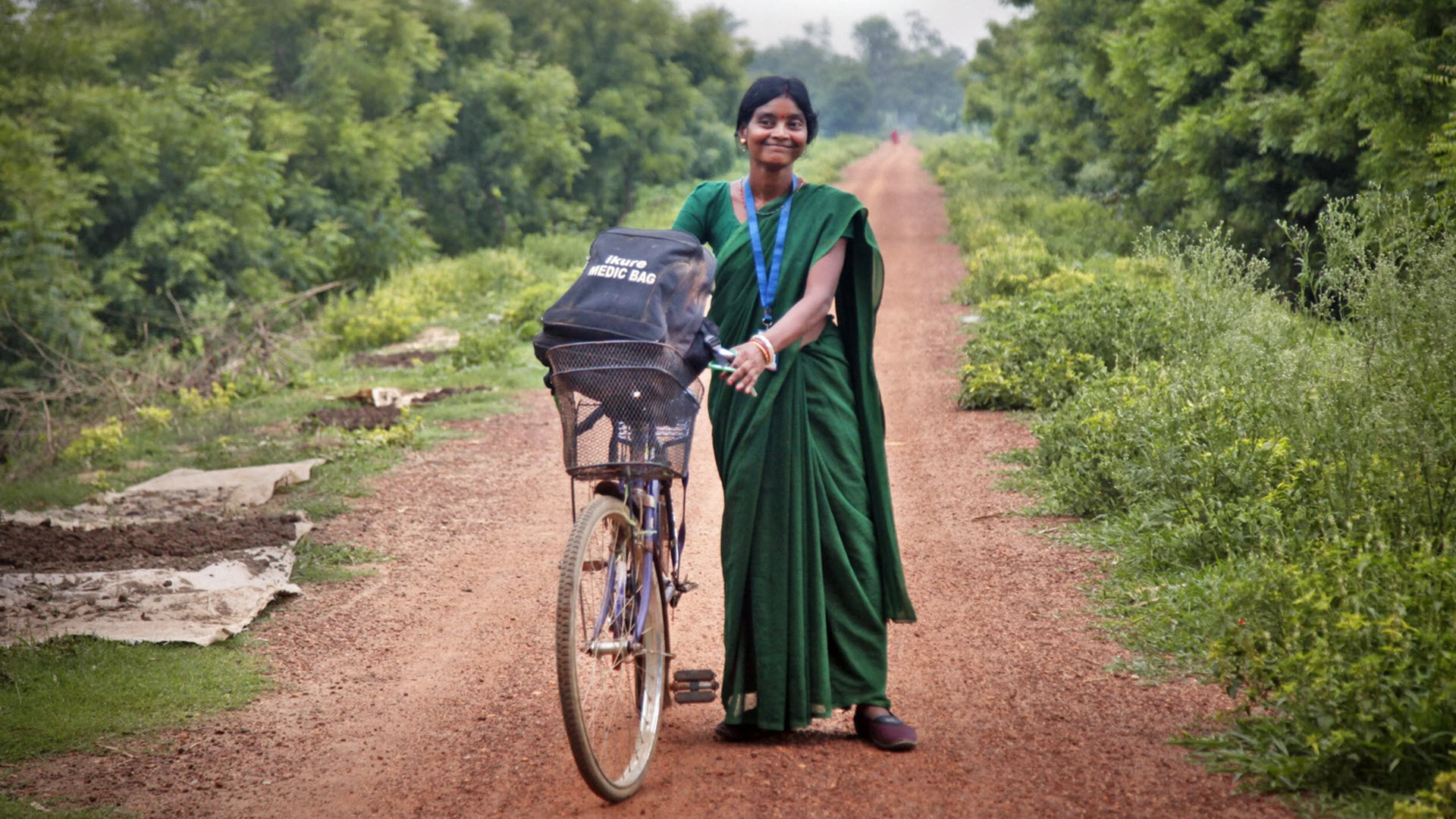
The first patients are already waiting by the time Pranati Karan reaches the village. A canvas medical bag hangs over one shoulder. Inside are a blood pressure monitor, a glucometer and the diagnostic tools she relies on throughout the day. In her hand is a smartphone, where every consultation is recorded before she walks to the next household. Most mornings follow a familiar route. She checks the blood pressure of an elderly man who has become one of her regular patients, sees a pregnant woman for an antenatal follow-up and stops by a family where diabetes has become part of everyday life. Before travelling to her next visit, she records the details of each consultation in WHIMS – iKure’s digital platform, the Wireless Health Incident Monitoring System. The platform keeps patient information in one place, helping the care team track follow-up and make referrals when needed. The villages she serves lie in the Sundarbans, a vast delta in southern West Bengal where rivers divide communities more often than roads connect them. During the monsoon, boat crossings replace short journeys by road, and a hospital that appears close on a map can take several hours to reach.
First my life was confined to household chores and taking care of my family. Now I take care of my community as well.
Pranati Karan
Community Health Activists (iCHA) at iKure
Pranati grew up here, where healthcare has always required planning. "First my life was confined to household chores and taking care of my family," she says. "But now I have a more prominent role to play. Now, I take care of my community as well." Today, she is one of iKure's community health activists (referred to as iCHAs). Recruited from the communities they serve, these health workers provide basic diagnostics and health education while remaining connected to doctors who can be consulted remotely whenever more specialized care is needed. They return to the same families week after week, sometimes for years. That familiarity changes the conversation. People ask questions they might otherwise keep to themselves, mention symptoms they have ignored for weeks and answer the door because they already know who has come to visit. Over time, Pranati learns who is due for another blood pressure check, which pregnant woman has an antenatal appointment next week and which patient has not collected medication. Most days are spent returning to the same households, continuing conversations that began weeks earlier and noticing when someone quietly disappears from care. Tomorrow, she will walk many of the same paths again.
The challenges facing the Sundarbans are far from unique. India has made significant progress in strengthening primary healthcare through its government programs, where primary care is intended to meet 80–90% of people's healthcare needs [1]. The greater challenge often comes afterwards: ensuring that people continue receiving care over time, particularly when managing chronic conditions such as diabetes and hypertension. When technology met reality When Sujay Santra, Founder and CEO, iKure Techsoft founded the organization in Kolkata in 2010, it looked very different. After twelve years at IBM and Oracle as a solutions architect, he believed technology could help close some of the gaps separating underserved communities from quality healthcare. The first version of iKure reflected that background, focusing on digital health solutions for governments, companies and healthcare providers. The field quickly challenged that assumption. During a conversation with Philips Foundation, Sujay reflected on how those early years changed his thinking. "We understood that technology is not good enough on its own to create the right kind of impact." In the communities where iKure worked, obstacles rarely arrived all at once. Visiting a clinic could mean losing a day's wages. During the monsoon, rivers became difficult to cross. Medicines were not always available when they were needed, and another appointment required another journey. None of these challenges seemed insurmountable on their own, yet together they gradually weakened the connection between patients and the healthcare system.
We understood that technology is not good enough on its own to create the right kind of impact.
Sujay Santra
Founder and CEO of iKure Techsoft
Rather than abandoning technology, iKure began rethinking its role. Clinics became local hubs instead of standalone facilities. Community health workers became the first point of contact. Technology moved to the background, supporting clinical decisions, connecting patients with doctors and helping health workers follow people over time instead of simply recording individual consultations. "The future of healthcare is not going to be the hospitals," Sujay said. "It is going to be the patient's doorstep." Over time, those changes evolved into a model designed to bring healthcare closer to where people live while ensuring patients move through the health system only when higher levels of care are needed. Known as Brick-and-Click, the model combines physical clinics with digital health tools and a network of community health activists working across surrounding communities. Clinics provide consultations, diagnostics and clinical oversight, while community health workers extend that care into villages, carrying diagnostic equipment, arranging teleconsultations through WHIMS and returning to the same households over time. Every consultation becomes part of a longitudinal health record, giving clinicians access to previous consultations, medication history and referrals rather than a single snapshot in time. To date, iKure has operated across 11 Indian states and is currently active in six. It has reached more than 36 million people and delivered over 4.5 million patient interactions across more than 7,900 villages. More than 4.5 million patient interactions have been recorded through the platform. For iKure, however, the numbers only tell part of the story.
Fifteen years is a long time in digital health. Technologies change, funding priorities shift and promising pilots come and go. iKure spent those years refining the same model. Instead of expanding rapidly into new countries, the organization focused on adapting its approach to different parts of India. What worked in the Sundarbans also had to work in the smaller towns of Jharkhand, the rural districts of Odisha and communities with different languages, disease burdens and healthcare systems. But for Sujay, scale has never been measured by the number of clinics." Unless it is strengthening our core, we don't do that," he said. "We have stopped chasing projects that don't contribute to building a sustainable model." Sujay believes the next challenge lies in preparing community health workers for technologies that barely existed a decade ago. Artificial intelligence and portable diagnostics are becoming part of primary healthcare, while training often struggles to keep pace. Building those skills, he said, is a continuous process. As healthcare evolves, community health workers need ongoing opportunities to learn and adapt.
The future of healthcare is not going to be the hospitals. It is going to be the patient's doorstep.
Recognizing what works Global health has never lacked promising ideas. Every year, new technologies, community programs and digital platforms demonstrate ways of improving access to care. Many perform well during pilot projects. Far fewer become part of everyday healthcare delivery, adapting to different communities and continuing long after the initial funding has ended. For Philips Foundation, the question is rarely whether an idea is promising. More often, it asks whether an organization has demonstrated that its approach can strengthen healthcare systems over time. That perspective reflects Philips Foundation's broader strategy: proving what works, helping proven approaches scale and sharing the lessons they generate so others can adapt them. Impact investing is one of the ways Philips Foundation contributes to that ambition, alongside grant-based partnerships. By the time Philips Foundation invested in iKure, the organization had spent more than a decade refining its model. Community health workers, clinics, digital health records and referral pathways had become part of a single system designed to support people over time. The investment recognized that maturity as much as the innovation itself.
World Diabetes Foundation arrived at a similar conclusion from a different starting point. After more than two decades of strengthening diabetes prevention and care across low- and middle-income countries, it had repeatedly encountered the same challenge: helping people remain connected to care long after diagnosis. In iKure it recognized a model built around that very principle: community-based care supported by trusted relationships, longitudinal health records and digital tools that help sustain care over time.
Together with We Share Forward Foundation, our shared conviction led to the creation of ImpactBridge [2], a collaborative investment platform supporting organizations that have already demonstrated their ability to strengthen healthcare systems in practice. More than a source of capital, it reflects a belief that durable change is built by recognizing what works, helping it grow responsibly, and ensuring that others can learn from it.
[1] Ministry of Health and Family Welfare (2026). Initiatives and achievements 2025
[2] Impact insider (2025). How three foundations want to rethink philanthropy – and save millions of lives
September 08, 2026
June 16, 2026
April 24, 2026
March 10, 2026
January 28, 2026


