
You are about to visit a Philips global content page
Continue
Mar 10, 2026
By the Philips Foundation team
We spoke with Eddine, Head of the Philips Foundation, about his personal journey and what it will take to strengthen referral systems across community and primary care. We discussed how a continuum of capital, from grants to impact investing, may be the quiet force behind sustainable healthcare reform.
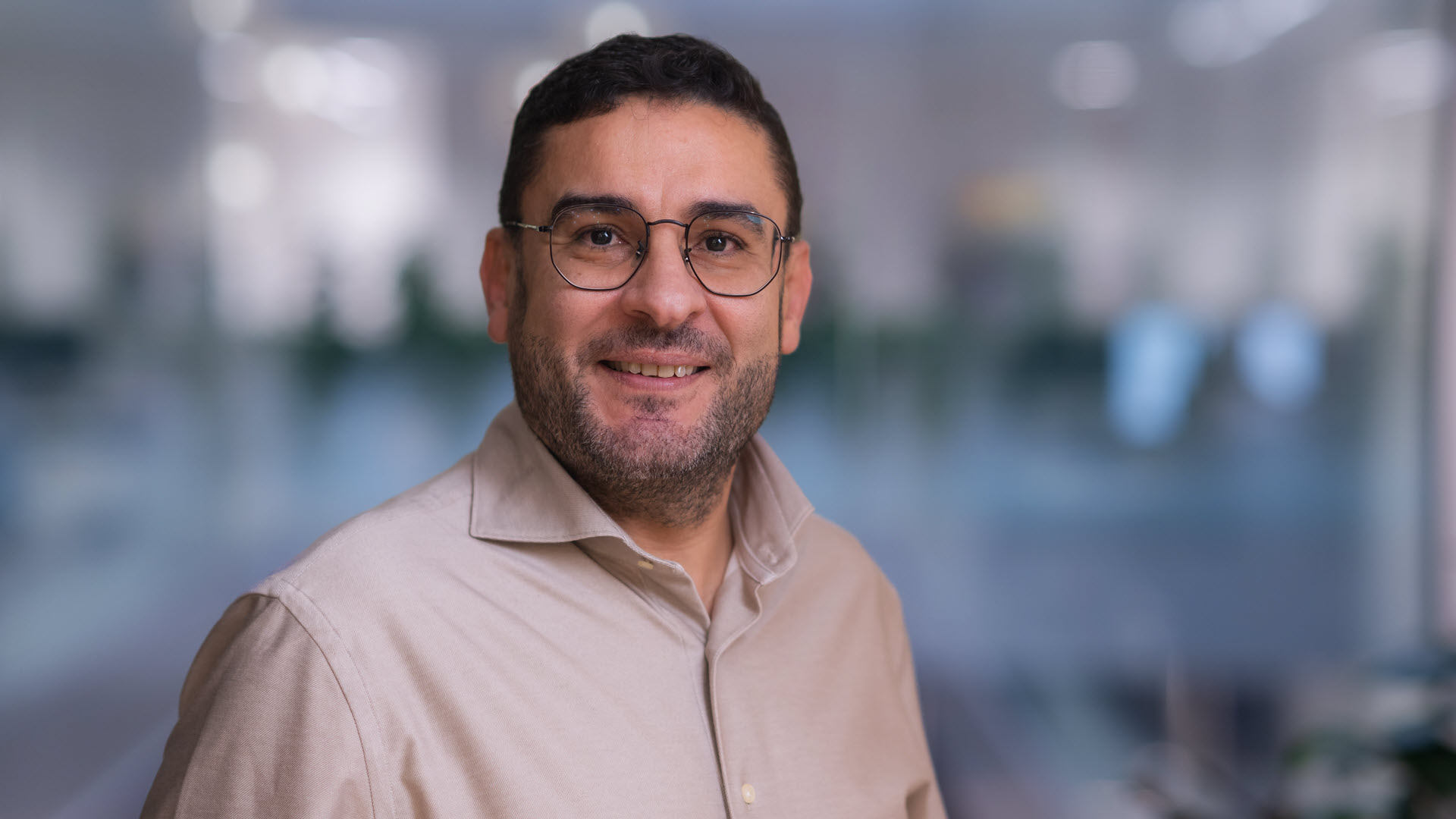
Bahaa Eddine Sarroukh, ‘Eddine’ to colleagues and partners, has been with Philips for 25 years. Over that time, his work has steadily moved closer to where innovation intersects with human need. As the new Head of the Philips Foundation, he now leads an organization focused on strengthening healthcare systems for underserved communities globally. That focus is relevant today. According to the latest report from the World Health Organization and the World Bank Group (2025) on tracking universal health coverage, more than 4.5 billion people – that’s over half of the world’s population – lack access to essential health services. At the same time, around 2 billion people struggle to pay for healthcare, and hundreds of millions are pushed deeper into poverty each year simply because they seek treatment [1]. In many low- and middle-income countries, and underserved communities in particular, healthcare systems remain fragile, especially at the primary care level where early detection often begins. We sat down with him to reflect on his journey, his plans for the Philips Foundation, and how improving referral systems, in combination with focus and discipline, can build healthcare systems that last for underserved communities.
Technology has tremendous potential, but its real value lies in how it is applied within real world health systems to create lasting impact.
You have been working at Philips for 25 years. What has your journey looked like? Over time, my focus moved closer to where impact becomes tangible: improving access to quality healthcare for people who need it most. At the Philips Foundation, this means working with ventures, non-profits and other partners within health systems to scale innovations that can strengthen healthcare access. The common thread throughout my journey has been meaningful innovation. Technology has tremendous potential, but its real value lies in how it is applied within real world health systems to create lasting impact. You’ve worked in different regions, including Kenya and other countries in Africa. What did this experience teach you? After so many years in healthcare, what has made the issue of access resonate so strongly with you? For someone new to the Philips Foundation, how would you describe what it does?
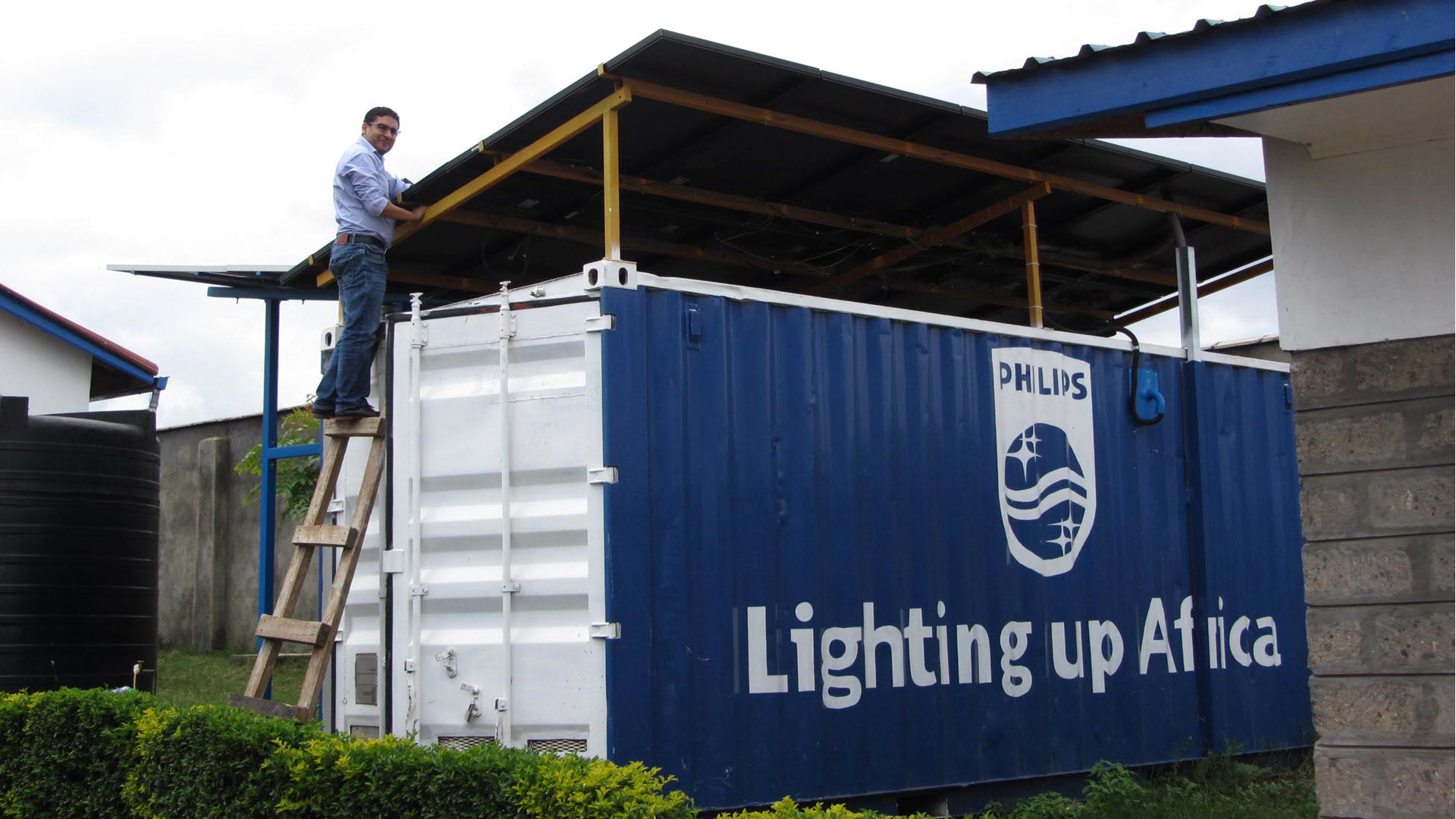
I have spent much of my career at the intersection of innovation, healthcare, and partnerships. Before becoming the Head of the Philips Foundation, I led R&D initiatives across Africa and advised the United Nations on innovation and technology. Those experiences shaped my perspective on how innovation can translate into practical solutions for underserved communities.
They clarified something fundamental for me: healthcare solutions often exist. The difference lies in whether systems can adopt them to work for those that need it most. Working in these settings gave me first-hand insight into what makes healthcare systems function: capable primary care providers, clear referral pathways to higher levels of care, dependable supply chains, and strong local ownership. Health systems are ecosystems. Strengthening them requires alignment and perseverance, not isolated or one-off efforts.
Access has been personal for a long time. As a child, I lost a family member because of healthcare access issues. That moment stayed with me. It shaped my determination to advocate for early detection and first-time-right diagnosis. It also shaped my conviction that health systems must function in a way that reaches people before it is too late.
We enable access to quality healthcare in underserved communities, and we do this by combining meaningful innovation, strategic partnerships, and catalytic funding to strengthen health systems. Our focus is on two major health issues: cardiovascular disease and maternal and child health. These are areas where the global health burden is high and where strengthening primary care can deliver measurable change.

Why is strategic focus especially important now? When needs are this vast, fragmentation does not help. Impact grows from depth and discipline. Concentrated efforts allow us to test responsibly, refine approaches, and scale sustainably. Focus increases the likelihood that solutions become embedded within everyday healthcare delivery. Prove what works. Scale what works. Share what works. This phrase anchors the renewed focus of the Philips Foundation. What does it mean? It represents the discipline in how we create lasting change. It begins with proving what works in real-world settings. In maternal health, for example, we supported pilots in Kenya where midwives were trained to use handheld ultrasound devices combined with digital decision support. This work helped validate the World Health Organization’s recommendation on early ultrasound screening before 24 weeks of gestation, demonstrating its feasibility in primary care settings. Midwives were able to identify high-risk pregnancies earlier and make more informed referral decisions. In contexts where specialist access is limited, that shift can determine whether complications are detected and managed in time. The evidence generated contributed to the integration of this approach into Kenya’s national healthcare system, embedding early ultrasound screening into routine maternal care pathways.
Because the scale of the challenge demands it. More than 4.5 billion people still lack access to essential health services. Cardiovascular disease causes 19.8 million deaths each year [2], with 80% occurring in low- and middle-income countries [3]. In 2023, around 260,000 women died from maternal causes and 4.8 million children under five lost their lives, largely in underserved settings [4][5].
Impact grows from depth and discipline. Concentrated efforts allow us to test responsibly, refine approaches, and scale sustainably. Focus increases the likelihood that solutions become embedded within everyday healthcare delivery.
The objective was never simply to run a pilot. It was to embed that capability into existing antenatal pathways so that it becomes routine practice. Each initiative follows the same discipline: test in context, measure rigorously, and design for integration from day one. And scaling? Scaling what works requires a different set of tools. Impact investments allow proven solutions to expand sustainably. When a social venture demonstrates measurable outcomes and responsible integration within health systems, catalytic capital helps extend its reach. In cardiovascular care, for instance, we have supported ventures providing AI-assisted diagnostics and tele-triage in primary care settings. With investment, those models can move beyond a single geography, strengthen referral networks, and build operational sustainability. Sharing what works completes the cycle. We document evidence, translate lessons into practical guidance, and engage partners so that proven approaches can be adapted and adopted elsewhere. As a non-profit, contributing knowledge to the broader ecosystem is part of our responsibility. Learning accelerates progress when it is shared. How does impact investing strengthen healthcare delivery models? Impact investing requires readiness at two levels: organizational readiness, and systemic readiness across the broader health system. The social ventures we invest in are assessed on their capacity to integrate into referral systems, support frontline capacity, and operate within interoperable ecosystems. Scaling access requires complementary solutions aligned within a broader health framework. Sustainable models extend beyond pilots and contribute to durable system improvement. This thinking also underpins ImpactBridge, our recently announced co-investment platform launched with the World Diabetes Foundation and We Share Forward Foundation. ImpactBridge connects social ventures with aligned capital and sector expertise to accelerate scaling in cardiovascular and other non-communicable diseases. By combining resources and coordinating support from the outset, it reduces fragmentation and helps proven solutions be embedded more rapidly within health systems. We welcome other investors to join ImpactBridge. When you look ahead, what defines success for you? By 2030, our ambition is to enable access to quality healthcare for 100 million underserved people each year. Reaching that goal is not a solitary effort. It requires us to rethink healthcare delivery and largely depends on collaboration across sectors, geographies, and partners who share a commitment to durable, system-level change. One last thing you would like to share?
If there’s one thing I’ve learned over the years, it’s that lasting change in healthcare depends on people. Frontline health workers. Local innovators. Partners who remain committed even under pressure.
Health systems around the world face structural challenges. Yet when committed people work together on shared goals, with focus and discipline, progress becomes steady and real. Step by step, access to care becomes reliable rather than uncertain.
That is what keeps me hopeful.
If there’s one thing I’ve learned over the years, it’s that lasting change in healthcare depends on people. Frontline health workers. Local innovators. Partners who remain committed even under pressure.
[1] WHO & World Bank Group (2025). Tracking universal health coverage (UHC): 2025 global monitoring report
[2] JACC (2025). Global, regional, and national burden of cardiovascular diseases and risk factors in 204 countries and territories, 1990-2023 [3] World Heart Federation (2023). World Heart Report 2023: Confronting the world’s number one killer [4] WHO, UNICEF, UNFPA, World Bank Group & UNDESA/Population Division (2023). Trends in maternal mortality 2000 to 2023 [5] UNICEF (2023). Levels and trends in child mortality For further information, please contact:
January 28, 2026
December 11, 2025
June 05, 2025


