
Disease Management Solutions
Empowering excellence across the care delivery pathway
A better way
To meet the growing challenges of cancer care, our Disease Management Solutions empowers clinicians with powerful tools that can lead the way to more confident diagnosis and staging, treatment decisions, therapy planning and follow-up, and ultimately, provide a better way to address unmet needs in the ever-changing healthcare landscape.
-
Prostate cancer care
Click here to learn more -
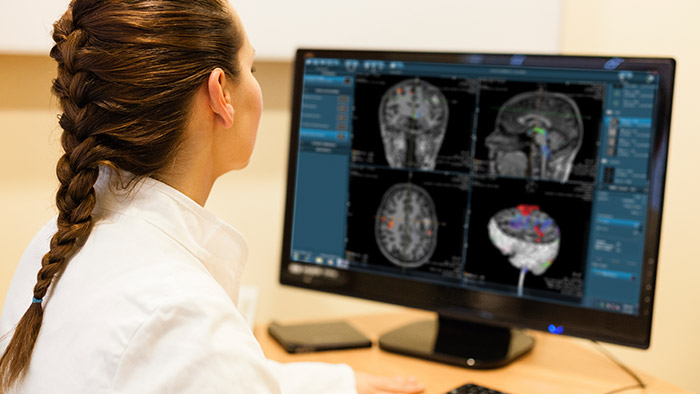
![Advanced neuro processing and visualization]()
Advanced neuro processing and visualization
Click here to learn more -
![Expand early detection of lung cancer]()
Expand early detection of lung cancer
Click here to learn more


-
Lung Cancer Orchestrator
The Philips Lung Cancer Orchestrator is an integrated lung cancer patient management system for both CT lung screening programs and incidental pulmonary findings programs that monitors patients through various steps of their lung cancer screening and treatment decision journey. Enhancing confidence with automated tools, the Lung Cancer Orchestrator helps identify and keep more patients – and streamline workflows. Providing a complete solution, the system also comes equipped with the Multidisciplinary Team Orchestrator to help facilitate collaborative clinical decision making.
841017 -
UroNav
Philips UroNav is designed to support you with image guidance during prostate biopsies and focal therapy procedures. It fuses diagnostic MR images of the prostate with live ultrasound images for guided procedures in real time. You get clear delineation of the prostate and suspicious lesions, as defined with DynaCAD Prostate¹, as well as clear visualization of the needle path. Combined with Philips DynaCAD Urology¹, you are equipped with a comprehensive solution supporting you at every step of the prostate cancer patient journey, enabling you to confidently deliver the precise care your patients deserve.
784026 -
DynaCAD Prostate
DynaCAD Prostate with Quibim QP-Prostate® AI brings fully automated outputs for prostate MRI analysis into a single platform — including AI-automated segmentation, lesion detection, and suspicion levels*. Designed to help radiologists streamline time-consuming prostate MRI review while keeping AI results accessible within the DynaCAD Prostate workflow.
784029


For support for Disease Management Solutions products in the United States, please contact: Technical Product Support: Phone: 1-800-722-9377, option 4 Philips Customer Service Portal Clinical Application Support: Email: [email protected]

